Dry-Type or Liquid-Filled Transformer? Check the Complete Specification
Compare transformer construction through electrical requirements, installation conditions, losses, service access and the documents needed for a clear quotation.
Key selection points
- Compare dry-type and liquid-filled construction against the electrical duty, site environment, ventilation, service access and applicable containment or fire requirements.
- Use one single-line diagram and electrical schedule to compare capacity, voltage and interface requirements across offers.
- Compare losses on the same stated basis and request drawings, accessories, test documents and deviations for the actual offered unit.
Understand the construction choice
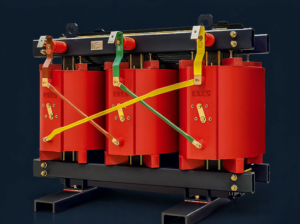
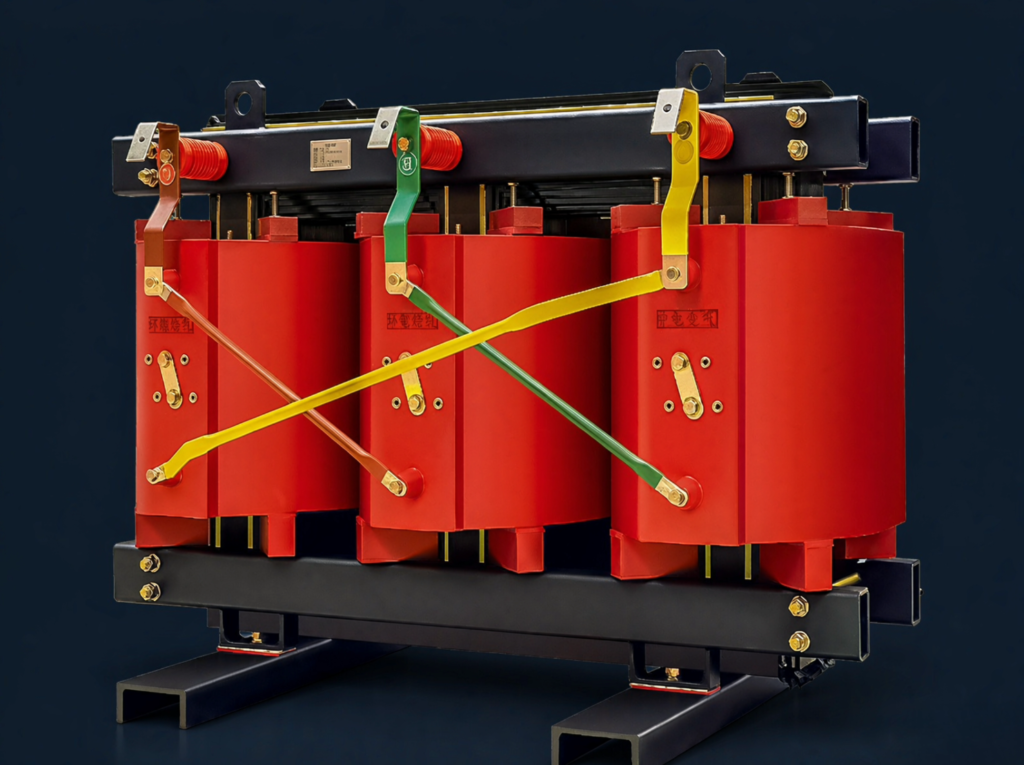
A dry-type transformer operates without a liquid cooling medium. Dry-type designs include ventilated and encapsulated constructions, with different ways of managing heat and exposure. A liquid-filled transformer uses an insulating liquid around its active parts. The construction label is a starting point; it is not a complete description of the equipment's suitability.
Manufacturer comparisons identify differences in environmental exposure and liquid containment. Translate those differences into questions for the actual location. Avoid assuming that all dry-type units are interchangeable, or that every liquid-filled design uses the same fluid and enclosure arrangement.
Describe the location before selecting the type
Give the supplier an installation brief covering indoor or outdoor position, ambient temperature range, altitude, moisture, dust and other relevant exposure. Identify nearby occupied areas, space constraints and access for delivery, inspection and replacement.
For a ventilated proposal, ask the designer to review the room and airflow requirements. For a liquid-filled proposal, request the fluid specification and have containment and applicable fire requirements reviewed for the site. Confirm enclosure protection and any environmental classifications on the specific offered model. A construction choice should follow this review, rather than substitute for it.
Build a common electrical schedule
Use one electrical schedule to evaluate every offer. Ask the project engineer to confirm which values and tolerances matter at the transformer interfaces; do not choose capacity solely from the sum of equipment nameplates.
- Specify rated kVA, primary and secondary voltages, frequency, phases and winding connection.
- Define voltage adjustment requirements, impedance and coordination with the proposed protection.
- Describe the load profile, motor starting, nonlinear loads and planned expansion.
- Request the applicable temperature-rise and insulation data, together with site operating limits.
- Confirm terminal positions, conductor interfaces and monitoring requirements.
Compare operation using consistent conditions
Request no-load and load-loss information on a clearly stated basis, and compare it with the project's expected utilization. Ask suppliers to identify the test conditions behind efficiency and sound data. Different loading assumptions can make apparently similar figures difficult to compare.
Separate the questions of heat generation, enclosure footprint and room design. Review the maintenance plan with the people who will operate the facility: what inspections are expected, which components need access and what support or spares are available? An attractive purchase price is only one part of this decision.
Turn the enquiry into a reviewable proposal
Provide a single-line diagram, electrical schedule, site brief and installation layout. Request a dimensional drawing, itemized accessories, declared losses, relevant test documents and a clear list of deviations. Production test scope should be stated for the actual transformer offered; a general catalogue is not evidence for every configuration.
Agree responsibility for installation review, protection settings and commissioning before delivery. Keep unresolved information visible in the proposal rather than filling gaps with standard assumptions. The result is a transformer selection that can be checked against the project, with the construction type supported by documented requirements.
With the voltage and installation conditions defined, compare dry-type and oil-immersed designs in the power transformer range.
This guide provides general planning information, not installation instructions or an approved system design. Use the offered model’s current documentation and qualified project professionals; applicable local requirements must be confirmed.
Manufacturer References
Common selection questions
When should a project compare dry-type and liquid-filled transformers?
Compare them after describing the installation environment and electrical duty. Dry-type and liquid-filled constructions manage heat, exposure and containment differently, so the category alone does not prove that a transformer suits the site.
What site information is needed to select the transformer construction?
Provide indoor or outdoor location, ambient temperature, altitude, moisture, dust, nearby occupied areas, space limits and delivery or replacement access. Review room airflow for ventilated designs and fluid containment or applicable fire requirements for liquid-filled designs.
How should transformer capacity be specified?
Use one electrical schedule and a project single-line diagram. Have the project engineer confirm the important interface values and tolerances; do not choose capacity only by adding equipment nameplates.
How can transformer losses and efficiency data be compared?
Request no-load and load-loss information on a clearly stated basis, together with the test conditions behind efficiency and sound data. Different loading assumptions can make similar figures difficult to compare.
What should a transformer enquiry package include?
Provide the single-line diagram, electrical schedule, site brief and installation layout. Request a dimensional drawing, accessory list, declared losses, relevant test documents and a clear deviation list. Production-test scope should be stated for the actual transformer offered.
Send Inquiry
Contact us through the existing enquiry page or email manager@zhiyutone.com. No enquiry is submitted automatically.
Contact Zhiyutone →manager@zhiyutone.com